Shark Point Encountering Leopard Sharks
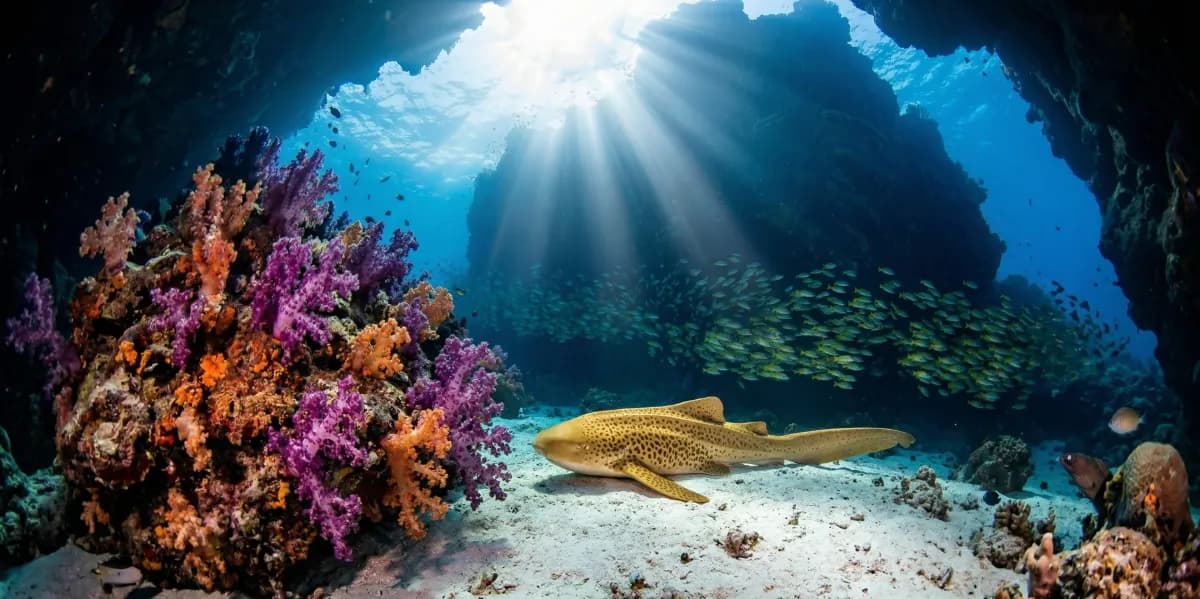
Shark Point, located 25 kilometers east of Phuket, is a premier diving sanctuary featuring three limestone pinnacles teeming with vibrant corals and docile Leopard Sharks. These nocturnal predators rest on sandy bottoms during daylight, offering divers excellent photography opportunities. Best experienced as a drift dive with moderate to strong currents, the site reaches depths of 22-25 meters. Private yacht charters...
The Sanctuary of Hin Musang
Known locally as Hin Musang, Shark Point is a premier marine sanctuary situated approximately 25 kilometers east of Phuket. This site is defined by three primary limestone pinnacles that rise from a sandy seafloor at a depth of 18 to 22 meters. For the professional diver or maritime enthusiast, Shark Point represents a high-fidelity display of the Andaman Sea’s biodiversity, characterized by vibrant purple and pink soft corals, massive sea fans, and a high concentration of its namesake: the Leopard Shark (Stegostoma tigrinum).
Unlike the more aggressive pelagic species found in open-ocean "blue water," the Leopard Shark is a docile, nocturnal hunter that spends its daylight hours resting on the sandy patches between the pinnacles. This behavioral trait provides a strategic advantage for divers, allowing for close-range observation and high-quality photography in a controlled, low-energy environment.
Technical Specifications: The Dive Matrix
Navigating Shark Point requires a tactical understanding of the region's tidal currents, which can vary from negligible to high-velocity. The site is best experienced as a multi-level drift dive, allowing the current to move you across the three pinnacles.
Parameter | Specification | Professional Note |
Max Depth | 22–25 Meters | Sandy bottom is where sharks are most frequently found. |
Visibility | 10–25 Meters | Peak visibility occurs during the incoming tide. |
Temperature | 28–30°C | Standard 3mm shorty or lycra skin is sufficient. |
Current | Moderate to Strong | Requires a "Negative Entry" during high-current windows. |
Primary Attraction | Leopard Sharks | Also look for Cuttlefish and Ornate Ghost Pipefish. |
Behavioral Insights: The Leopard Shark Protocol
To ensure a high-status encounter that respects the marine environment, it is essential to understand the "Tactical Patience" required when approaching these animals.
Sand-Patch Surveillance: Leopard sharks do not have the physiological requirement to swim constantly to breathe. Look for them resting motionless on the sand.
The Low-Profile Approach: Avoid swimming directly above or toward the shark’s head. Approaching slowly from the side at the same depth level prevents the animal from feeling cornered and triggers its natural curiosity rather than its flight response.
Nocturnal Transition: While docile by day, these sharks become highly active hunters after sunset. A dusk dive at Shark Point offers a completely different technical profile as the sharks move into the water column to feed on mollusks and crustaceans.
Professional Observation: The "Leopard" name is often confused with the Zebra Shark. Juveniles are striped (Zebra), while adults develop the iconic spots (Leopard). At Shark Point, you are primarily encountering mature adults measuring between 1.5 and 2.5 meters.
Operational Logistics for Private Charters
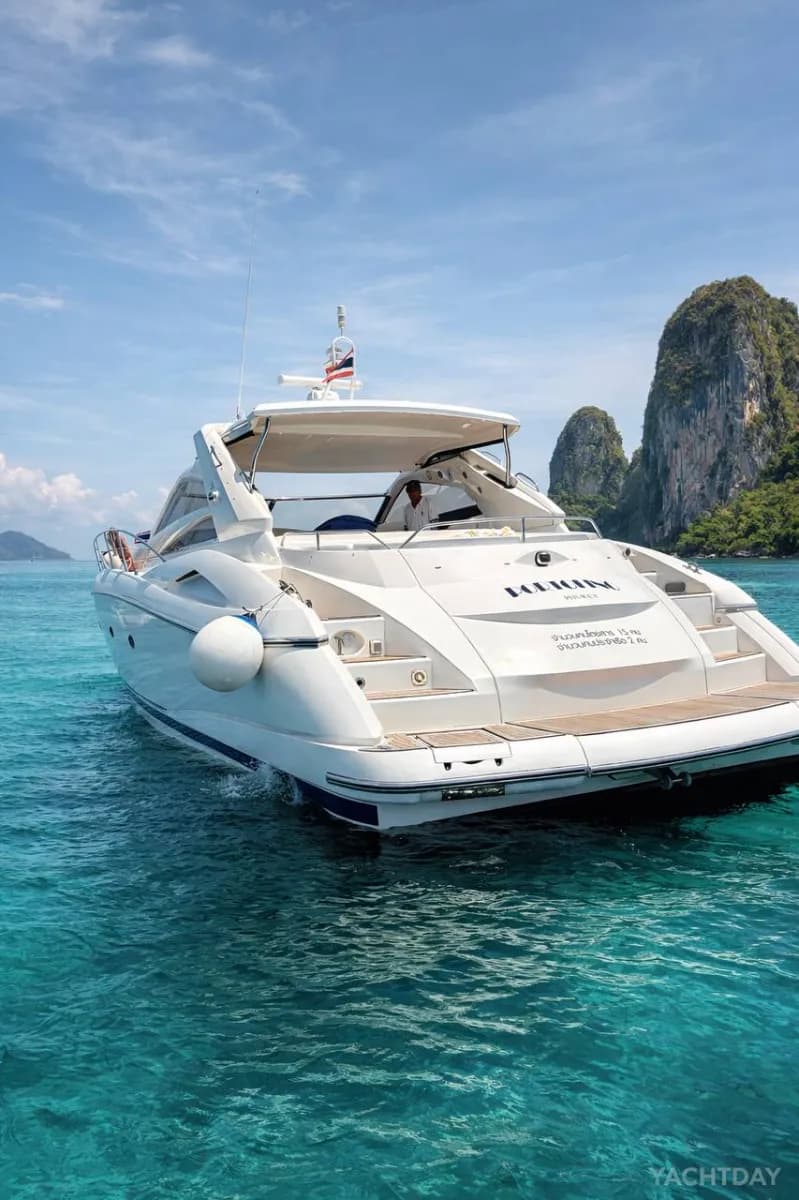
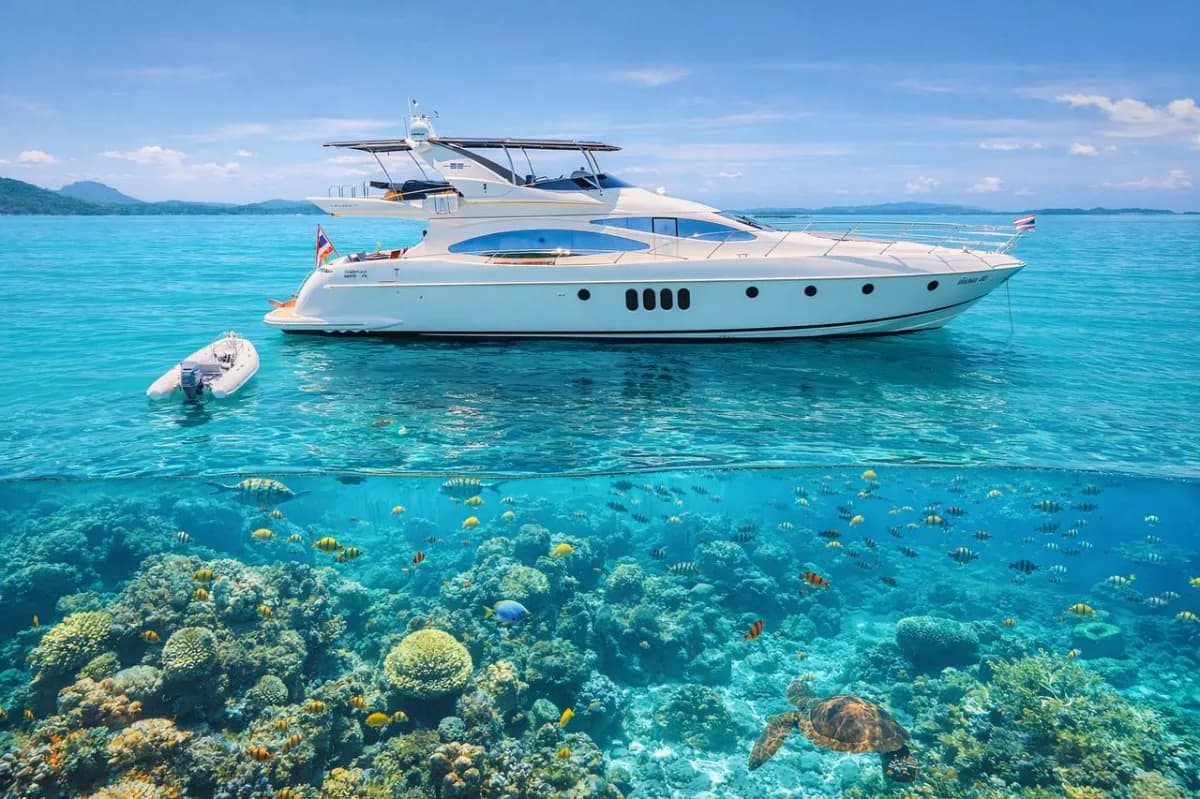
Shark Point is located in open water between Phuket and the Phi Phi Islands. Reaching the site by private yacht offers a level of comfort and flexibility that mass-market dive boats cannot match.
Mooring Reliability: The site is equipped with official National Park mooring buoys. Professional captains prioritize these to protect the sensitive coral heads from anchor damage.
The "Post-Dive" Decompression: After the dive, the yacht serves as a mobile recovery station. The proximity to Koh Dok Mai allows for a "Two-Site Strike" in a single day, balancing the shark encounter with the vertical wall-diving and macro-photography of the neighboring limestone island.
Safety Infrastructure: Ensure your vessel is equipped with high-concentration medical oxygen and a surface-marker buoy (SMB) for every diver, as the open-sea location requires high visibility for the pick-up maneuver.
Conclusion: A Masterclass in Marine Grace
Encountering a Leopard Shark at Shark Point is a definitive maritime experience that balances adrenaline with serenity. It is a reminder of the ocean's capacity for quiet majesty, where one of its most capable predators chooses to exist in a state of tranquil rest. By approaching the site with technical precision and environmental respect, you gain access to a world that remains largely hidden from the mainland—a world defined by the slow pulse of the reef and the spotted silhouettes of the sand.